What healthcare operations leaders need to know this week.
Policy, denials, coding, value-based care and delivery — reported for the people who
own the numbers, alongside the webinars, podcasts and research our partners publish.
Healthcare executives need more than reports.
They need connected intelligence that transforms operational, clinical, and financial data into actionable insights, enabling confident decisions that improve performance across the enterprise.
Healthcare becomes more efficient when every workflow communicates through a unified intelligence layer.
Connected data enables patient access, clinical care, imaging, laboratory, pharmacy, payer communication, and Revenue Cycle teams to work together seamlessly.
Every department within a healthcare organization performs better when information flows seamlessly.
Connected intelligence links patient access, clinical operations, diagnostics, pharmacy, finance, and Revenue Cycle into one coordinated ecosystem that supports faster decisions.
Healthcare leaders gain a unified operational view with AI powered intelligence that connects data, workflows, and performance insights.
Transform fragmented information into informed decisions that improve efficiency, financial outcomes, and strategic planning.
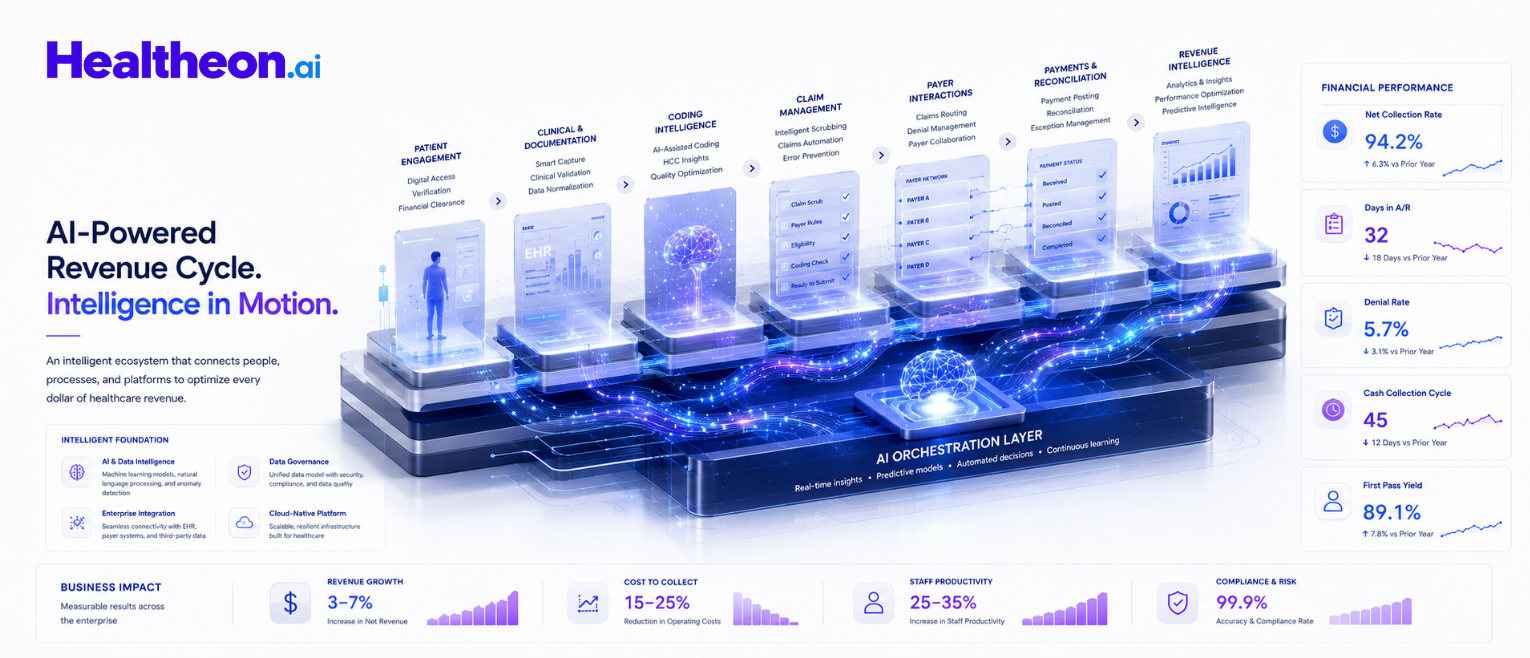
Healthcare Revenue Cycle functions perform best when they operate as one connected ecosystem.
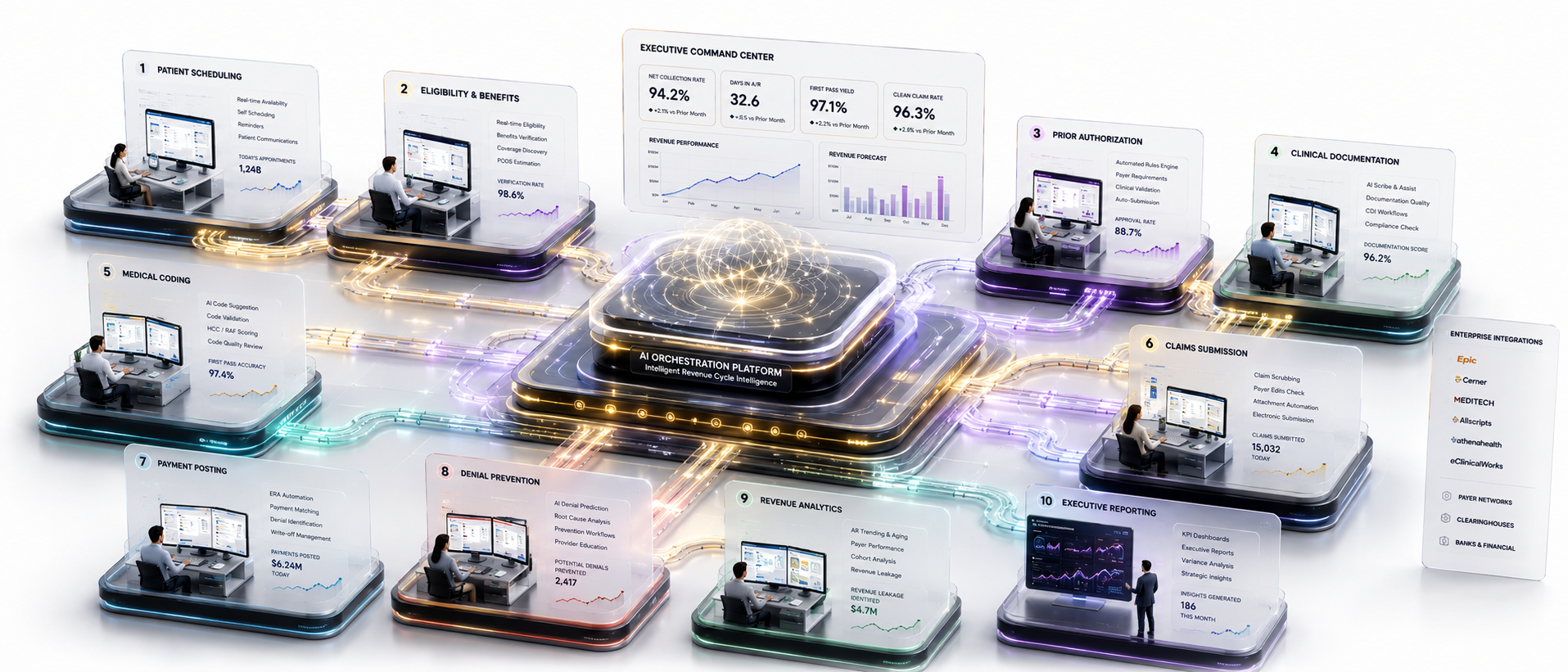
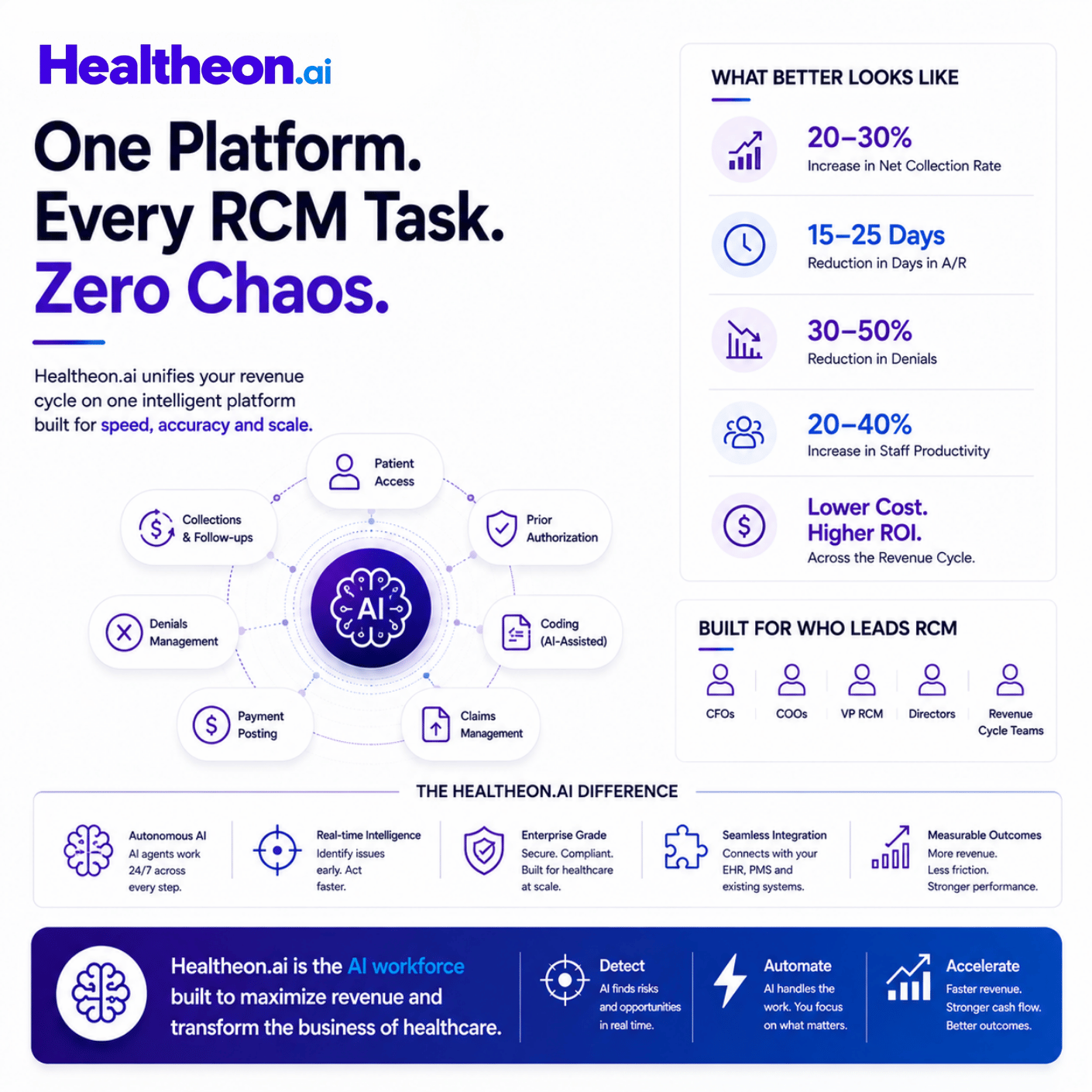
Healtheon.ai unifies every stage, enabling AI teammates to share intelligence, reduce operational silos, and improve decision making across the complete financial journey.
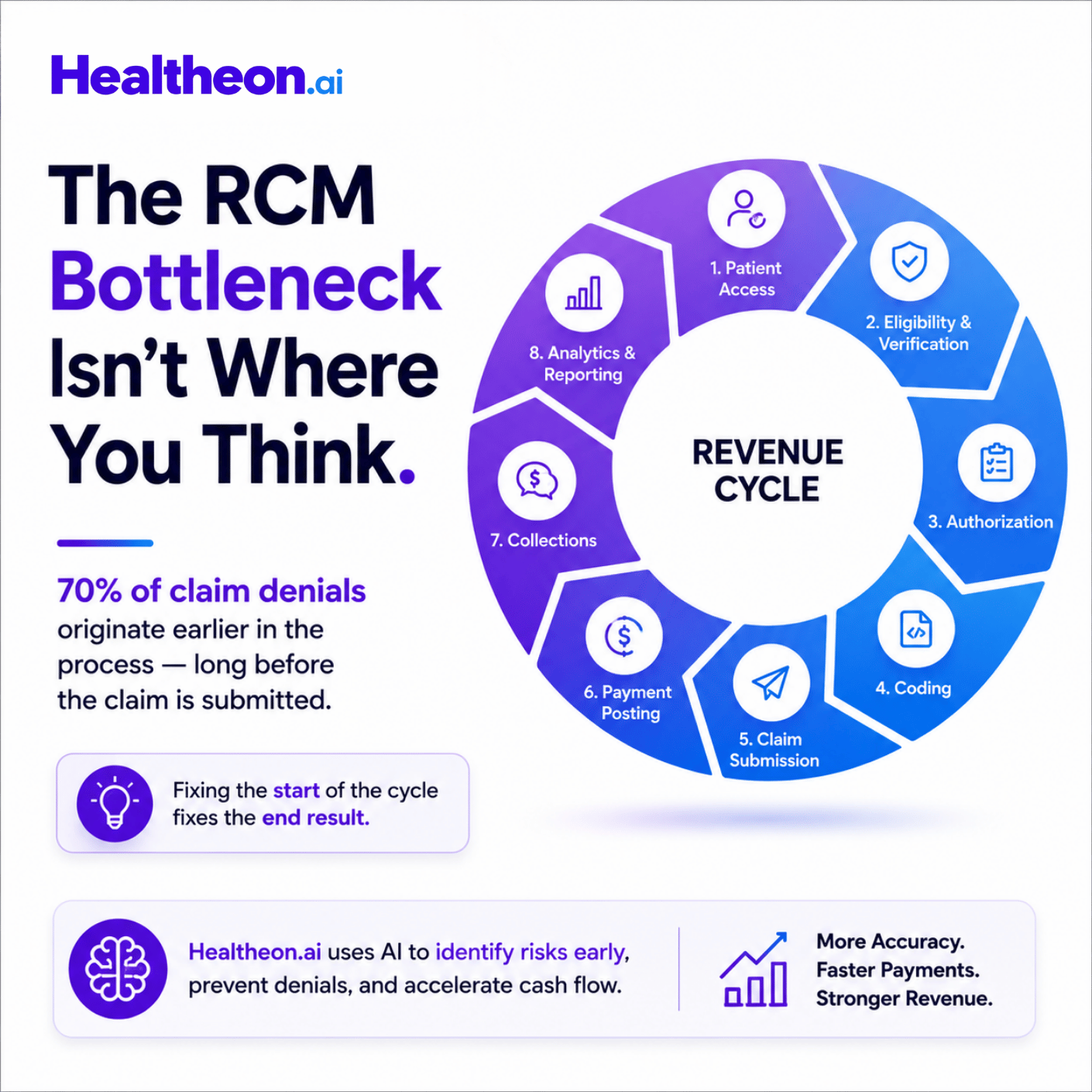
An AI orchestration platform connects every stage of the Revenue Cycle, from patient scheduling to executive reporting, enabling healthcare organizations to automate workflows, improve accuracy, and accelerate financial performance.
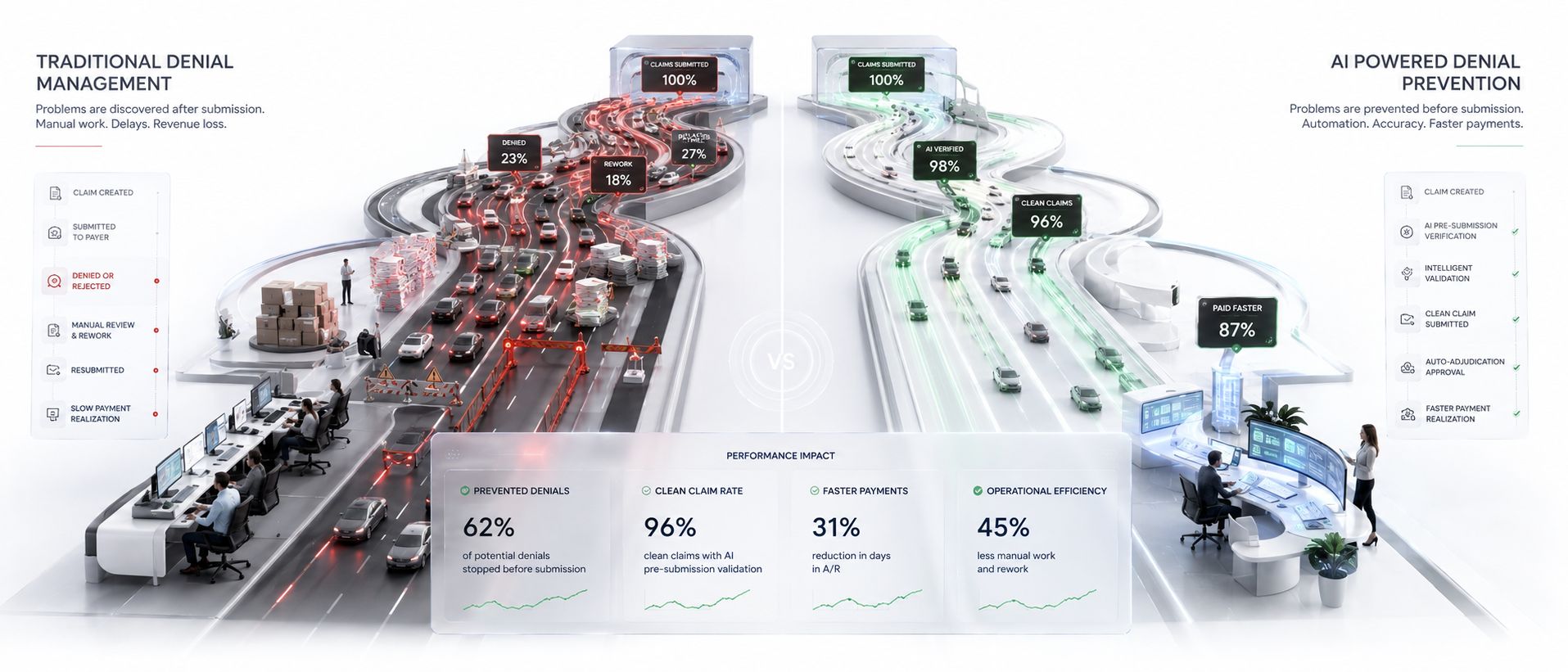
Traditional denial management reacts after claims are rejected.
AI powered prevention identifies issues before submission, helping healthcare organizations reduce rework, accelerate reimbursements, and improve claim quality.
Prior authorization becomes faster and more predictable when AI connects patient data, provider workflows, and payer requirements into one intelligent decision engine that recommends the optimal approval pathway.
Healthcare leaders need more than reports, they need actionable intelligence.
Unified AI insights connect financial, operational, and Revenue Cycle data to improve forecasting, optimize cash flow, and support faster, more informed executive decisions.
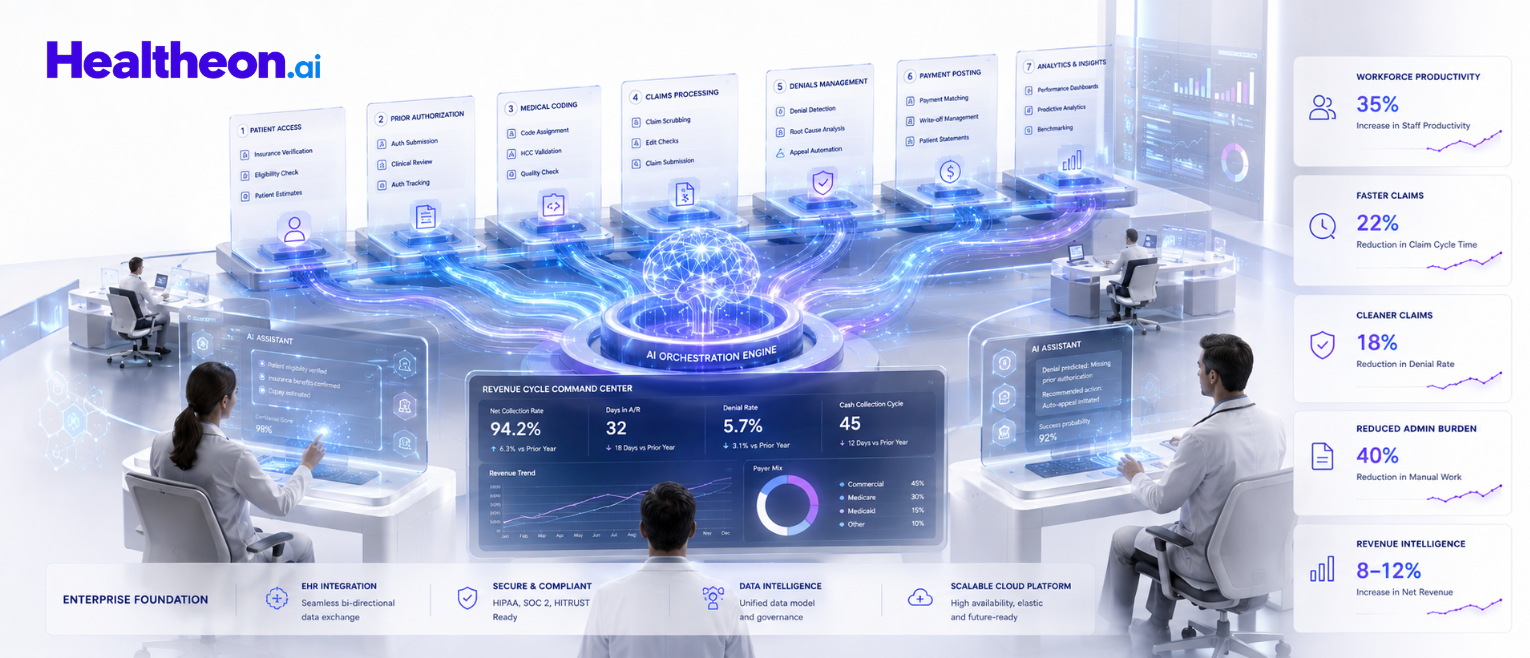
Modern healthcare organizations need more than automation. They need connected intelligence that links every RCM workflow, from patient access and coding to denials, payments, and analytics, helping teams work faster, smarter, and with greater operational confidence.
Healthcare revenue performs best when every stage works together. An AI powered intelligence layer connects patient access, coding, claims, payer interactions, payments, and analytics to improve efficiency, reduce delays, and accelerate financial outcomes.
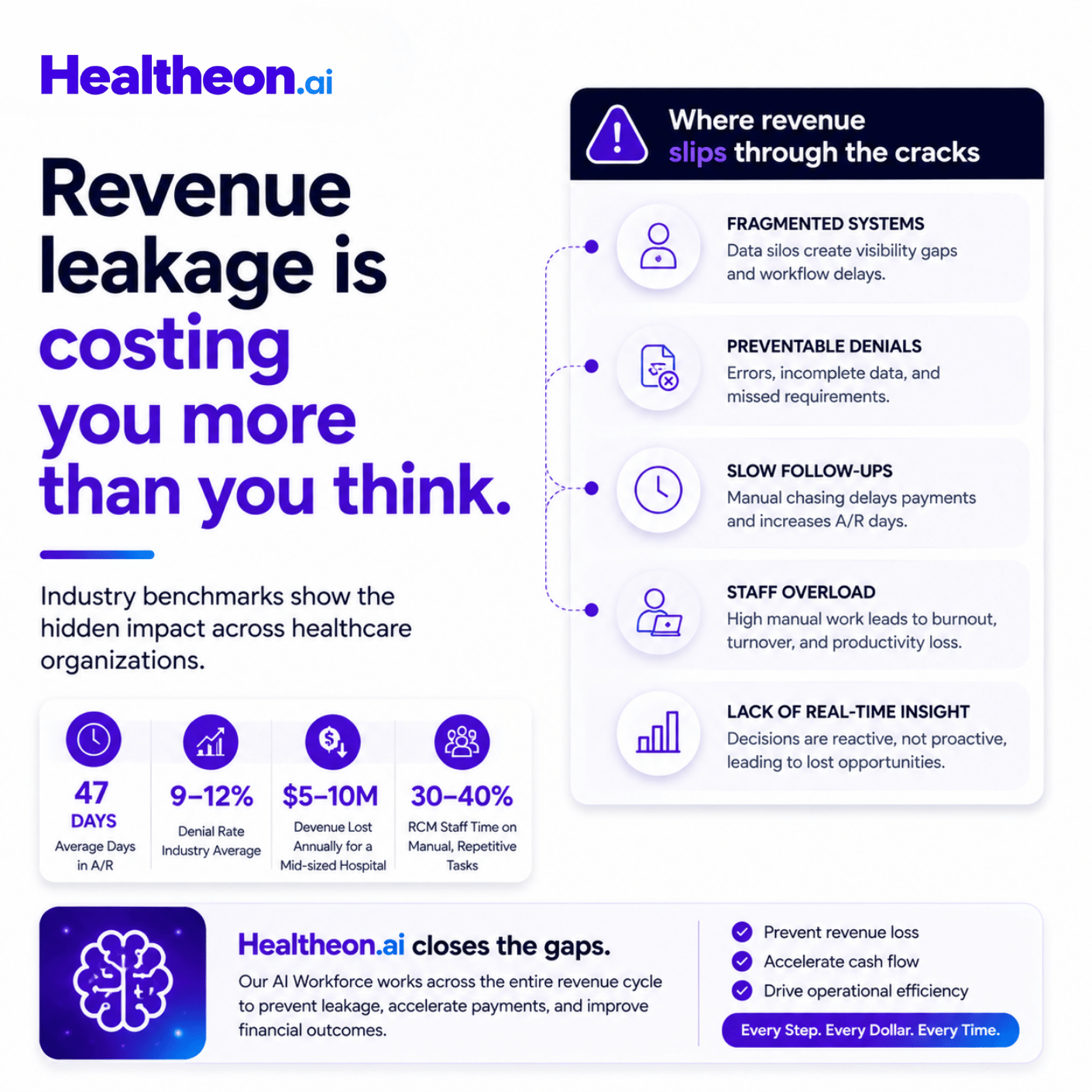
Revenue leakage is often caused by fragmented systems, preventable denials, delayed follow ups, and limited visibility. These hidden inefficiencies increase accounts receivable days, reduce collections, and create avoidable financial losses across the revenue cycle.
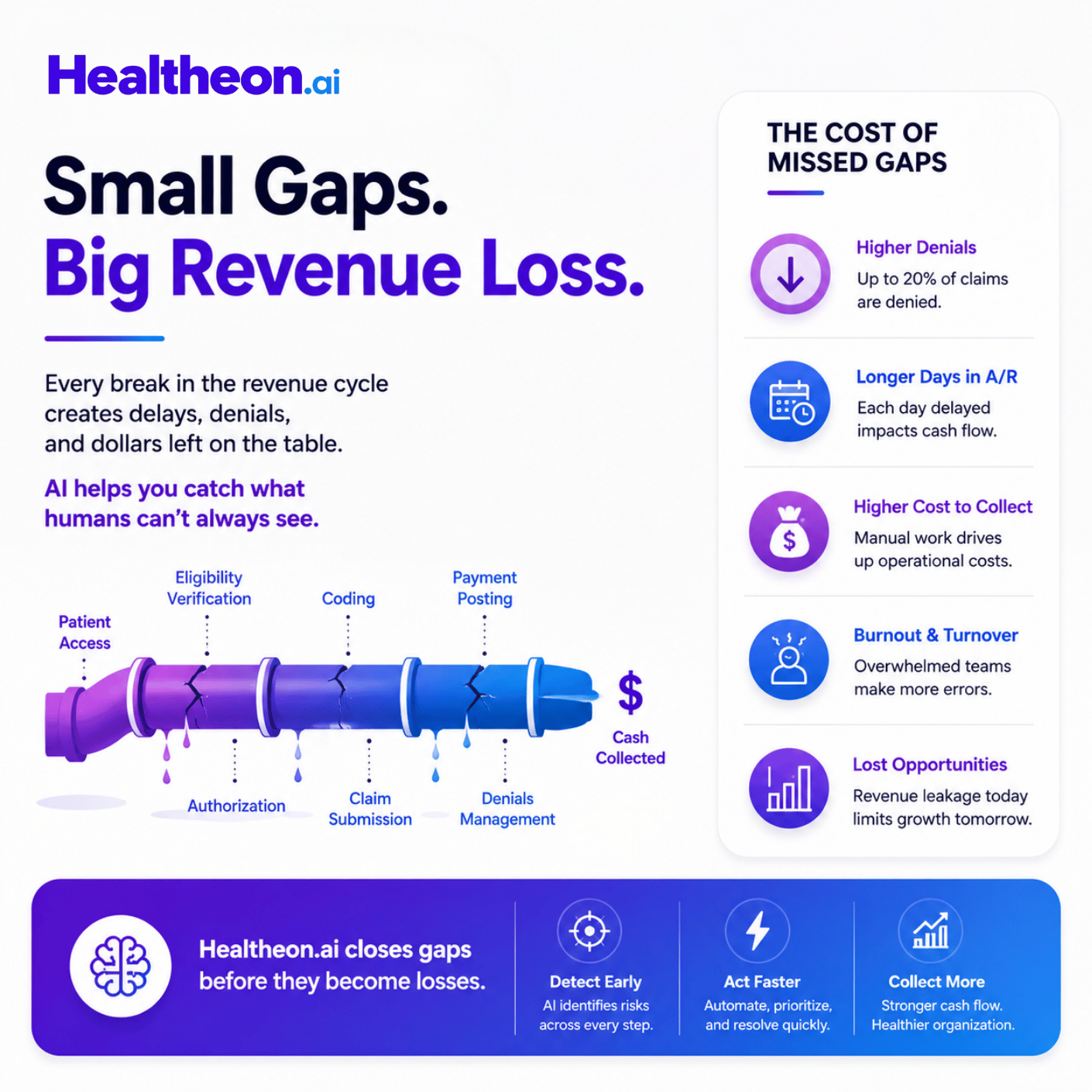
Tiny breaks across the revenue cycle can silently grow into denied claims, delayed payments, and rising operational costs.
Identifying issues at every stage helps healthcare providers prevent revenue leakage before it impacts financial performance.
Most claim denials don’t begin at claim submission.
They start much earlier through inaccurate patient data, eligibility issues, or authorization errors.
These overlooked bottlenecks quietly delay payments, increase denials, and reduce overall revenue.
We use one cookie to keep you signed in — that one is essential and cannot be turned off.
Separately we count page and content views, first-party only, with IP addresses salted and
hashed rather than stored. Nothing is counted until you choose.
We do not sell or share personal information, and there are no advertising or third-party
trackers on this site.
Read the detail.